Robert Rauschenberg was born in Port Arthur, Texas, in 1925. One of the most inventive and energetic figures in postwar American art, he studied at Black Mountain College in North Carolina, where he encountered John Cage and Merce Cunningham — relationships that would shape his entire creative life. His Combines of the 1950s, which merged painting with everyday objects, helped dismantle the boundaries between art and life and paved the way for Pop Art, Conceptualism, and performance.
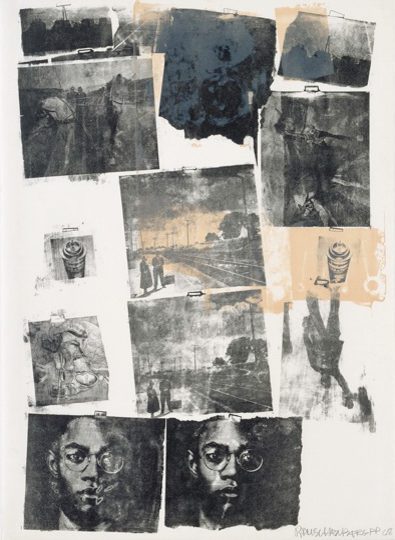
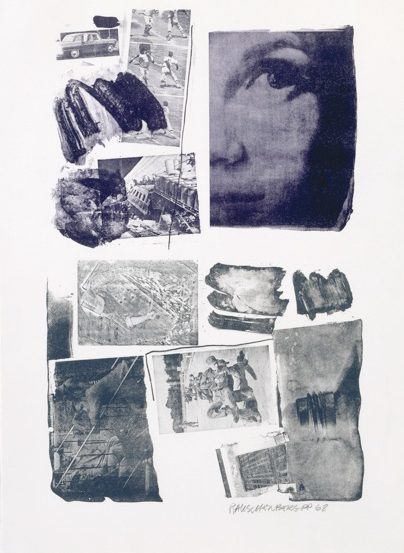
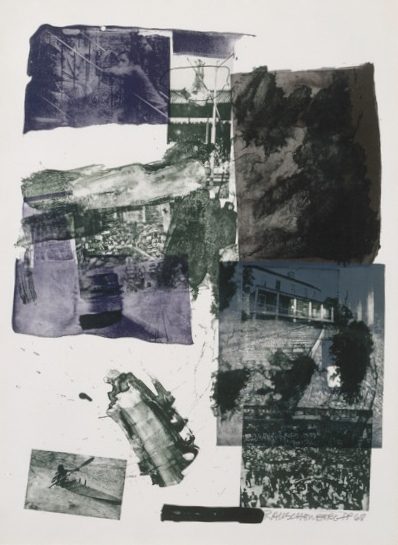
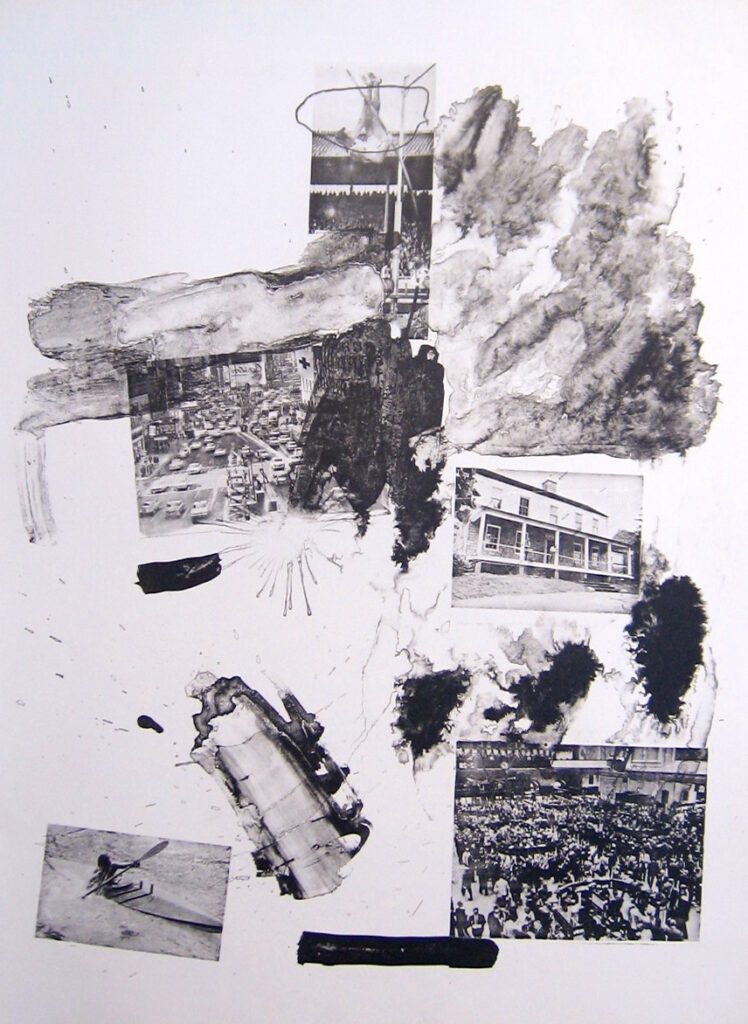
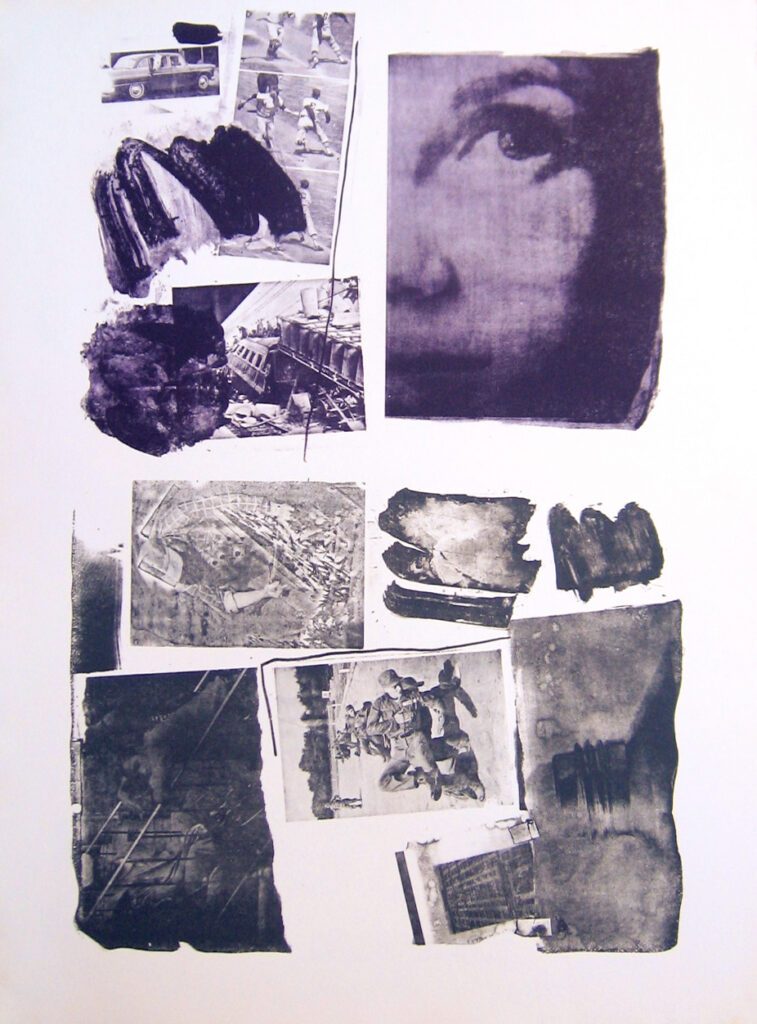
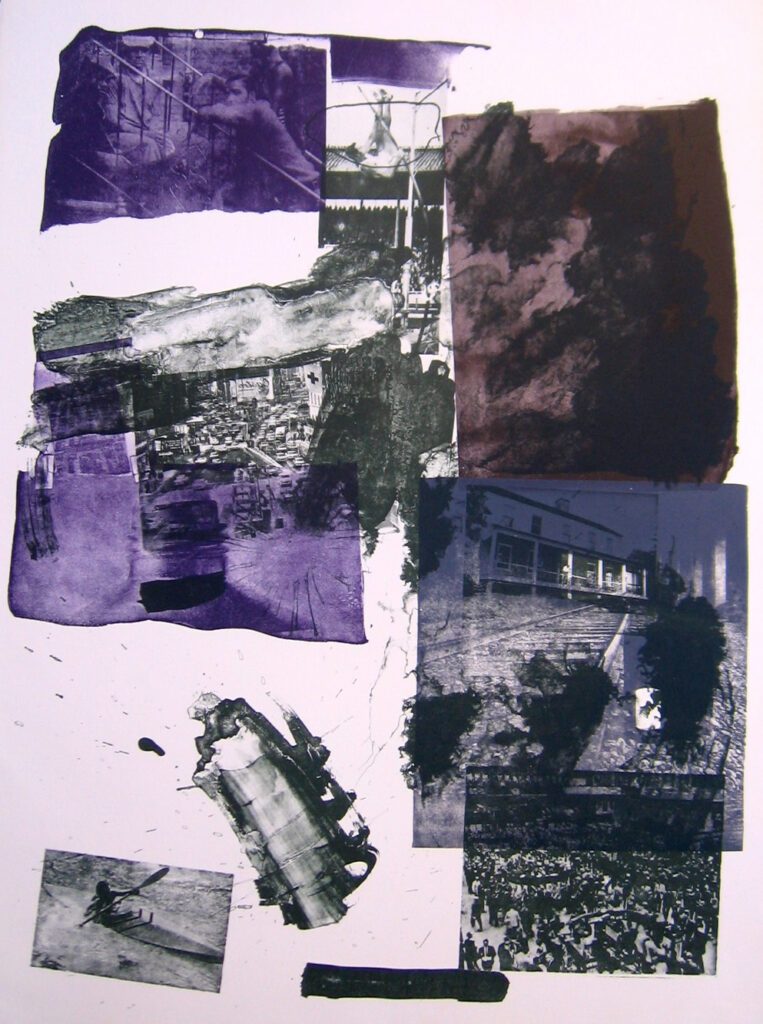
Rauschenberg came to lithography in 1962 through Tatyana Grosman at Universal Limited Art Editions. Until then, he had considered lithography an archaic medium with little relevance to the twentieth century. Working on stone changed his view entirely. As he described it, he came to recognise the unique possibilities of stone — and the realisation that anything capable of creating an image on stone was potential material.
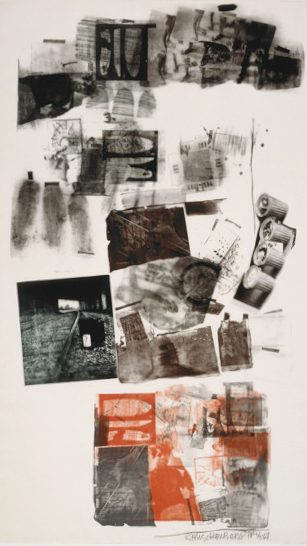
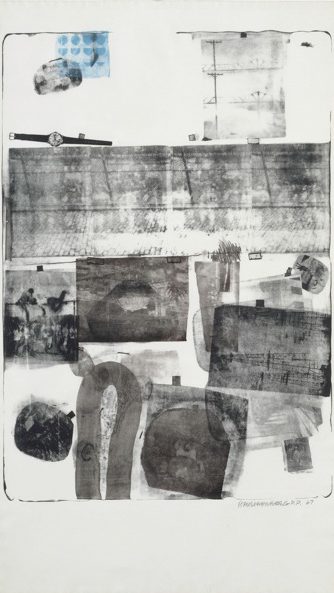
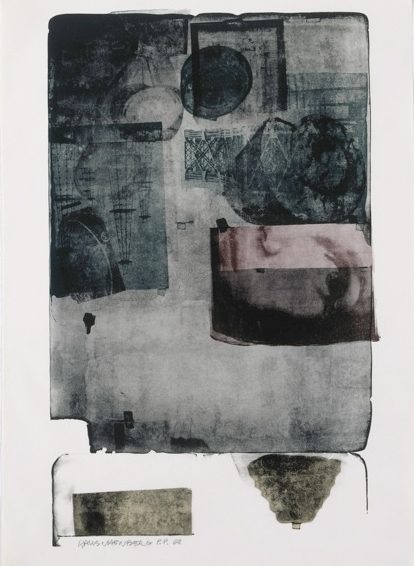
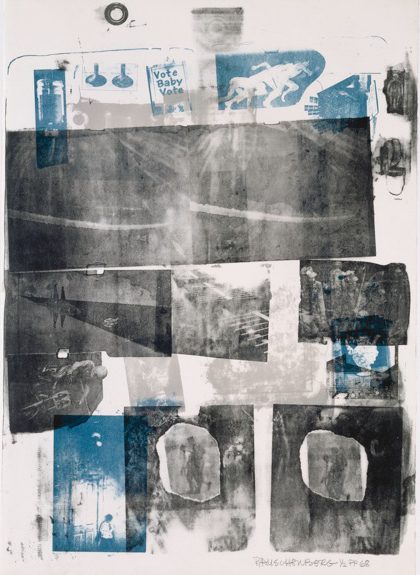
That conviction led to some of the most technically adventurous printmaking of the era. At U.L.A.E. in 1967, working with Fred Genis, he began experimenting with transferring magazine illustrations directly onto stone — a process with no set formula, requiring Genis to find ways to dissolve ink and make the transfer possible without losing the image. Some photographs transferred sharply; others printed in quick-drying inks would not transfer at all. Chance became part of the method, with blurs, distortions, and unexpected textures incorporated into the final work. His prints Drizzle (1967), Gamble (1968), and Waterstop (1968), all produced at U.L.A.E., reflect this spirit of creative problem-solving between artist and printer.
Rauschenberg received the Golden Lion at the Venice Biennale in 1964 and continued to work prolifically across painting, printmaking, and performance until his death in 2008.