Jacques Lipchitz was born in Druskininkai, Lithuania, in 1891. He moved to Paris in 1909, where he immersed himself in the artistic ferment of Montparnasse and formed close friendships with Picasso, Juan Gris, and Modigliani. Through his deep engagement with Cubism, Lipchitz found his distinctive sculptural voice — a language of interlocking planes, fragmented forms, and dynamic mass that would establish him as one of the foremost sculptors of the twentieth century.
Fleeing the Nazi occupation of France, Lipchitz emigrated to the United States in 1941. His later work grew increasingly expressive, moving away from Cubist rigour toward more fluid, mythological, and emotionally charged subjects — figures in struggle, ancient archetypes, and themes drawn from Jewish history and scripture. In 1972 he contributed to the Tree of Life lithograph suite, published by Hadassah in New York and printed at the celebrated Il Bisonte studio in Florence, to commemorate his monumental bronze sculpture destined for Mount Scopus in Jerusalem — a project that demonstrated both his enduring commitment to his Jewish identity and his sustained engagement with printmaking as a medium worthy of his most significant subjects.
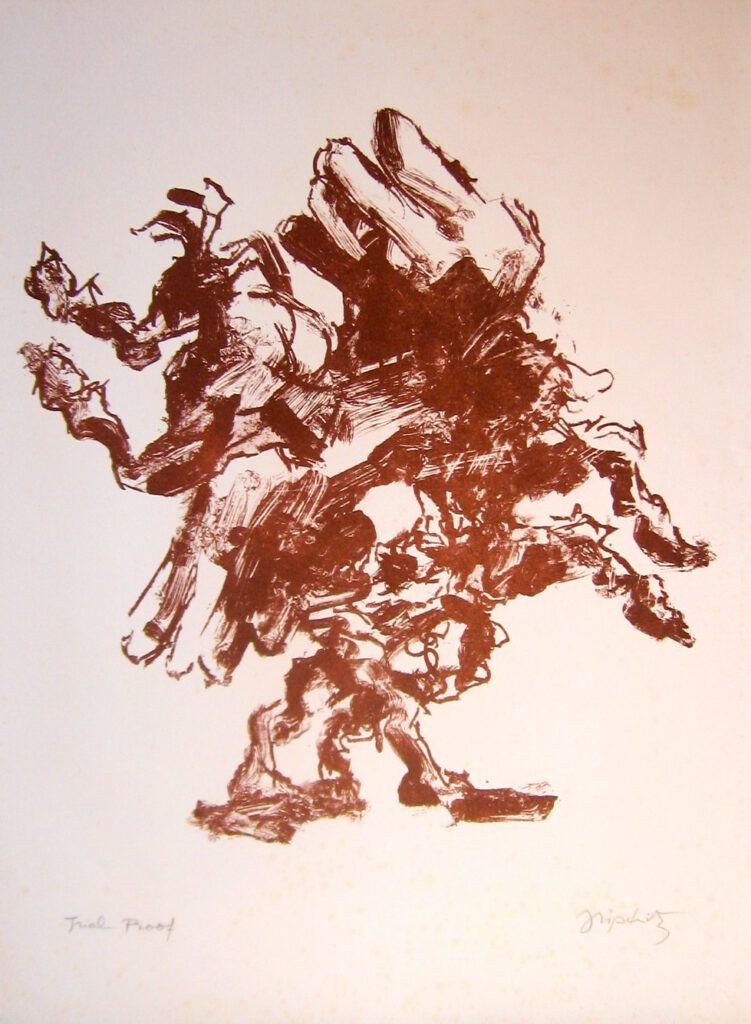
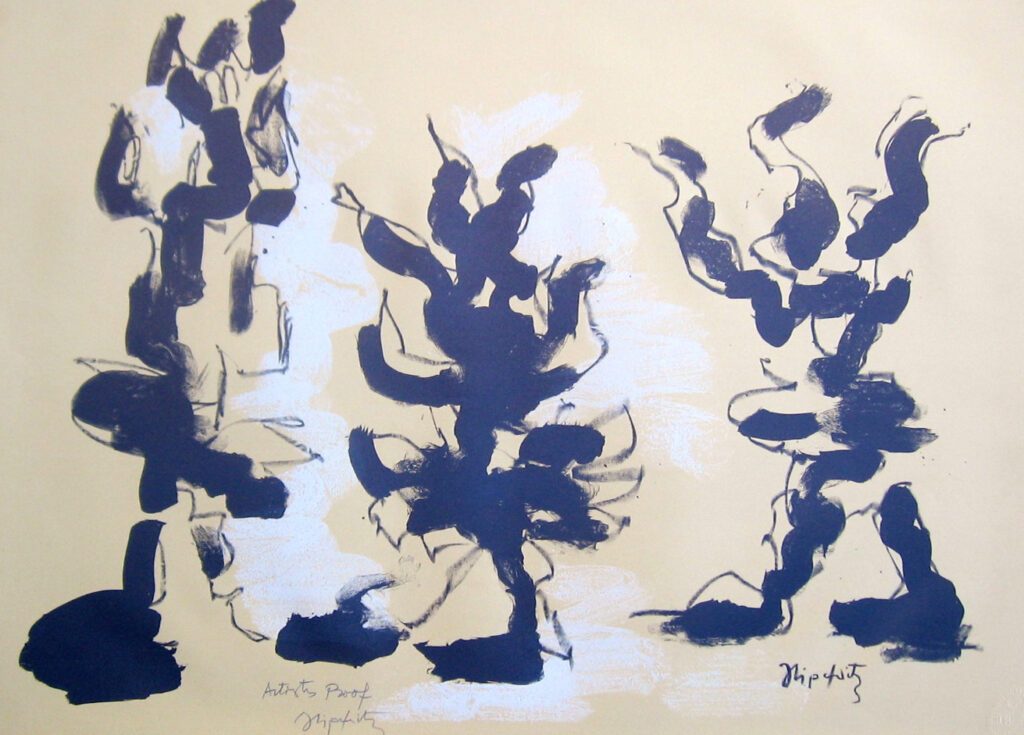
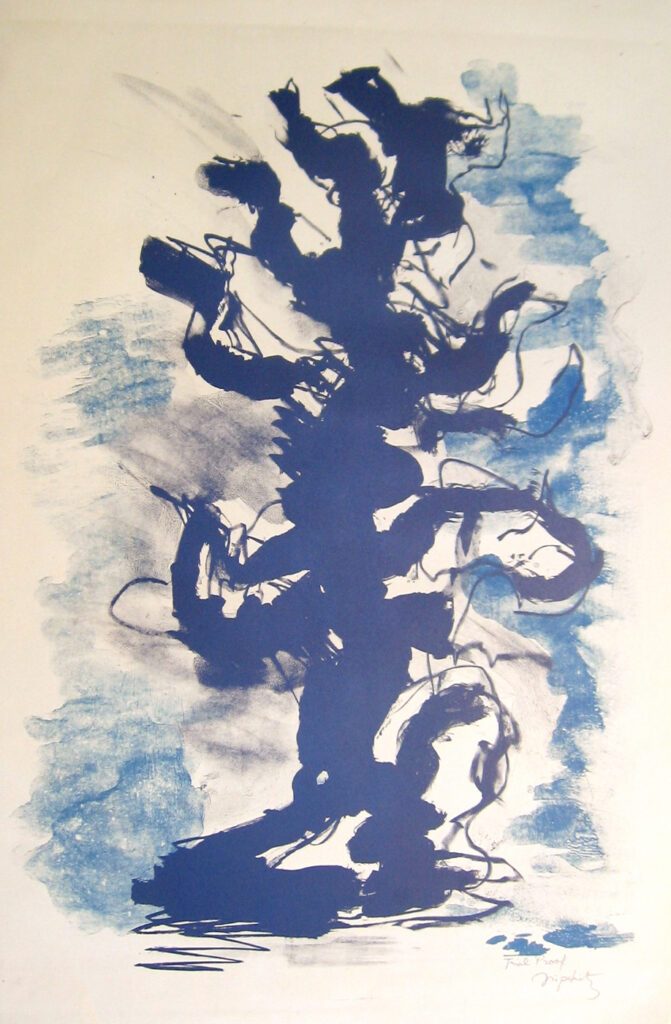
His prints Sculptural Forms, Three Sculptural Forms, and Sculptural Forms (Blue) were produced at Fred Genis’s workshop at Oudkerk in Friesland, the Netherlands, in the early 1970s. The works translate his signature sculptural preoccupations into the lithographic medium — interlocking masses and layered forms rendered with a solidity and depth that retain the feeling of objects existing in three-dimensional space, the rich textures echoing his characteristic gouged plaster and clay-working techniques.
Jacques Lipchitz died in Capri, Italy, in 1973. His work is held in major collections worldwide including the Museum of Modern Art in New York and the Tate Modern in London.