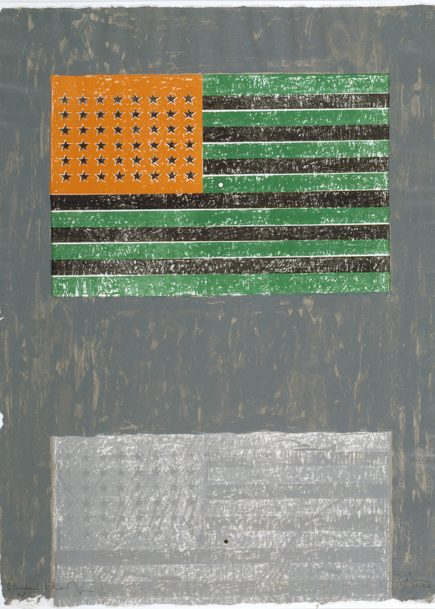
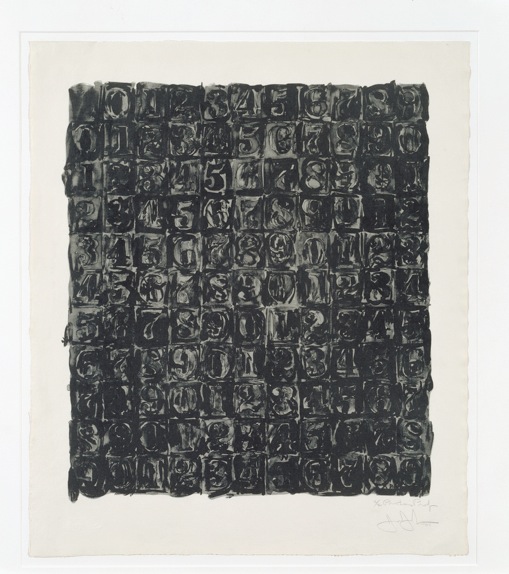
Jasper Johns was born in Augusta, Georgia, in 1930. One of the most influential American artists of the twentieth century, Johns emerged in the mid-1950s with paintings of flags, targets, letters, and numbers that challenged the dominance of Abstract Expressionism and helped lay the foundations for both Pop Art and Minimalism. His work occupies a singular position — cool and cerebral on the surface, yet charged with philosophical complexity beneath.
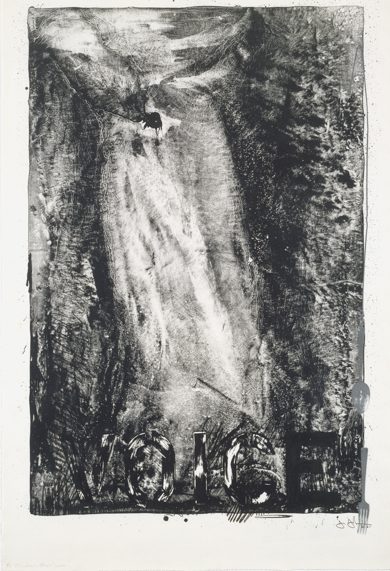
Johns came to lithography through Tatyana Grosman at Universal Limited Art Editions, making his first print in 1960. His early subjects — targets, flags, numbers — were not simply carried over from his paintings but transformed through the medium, each print becoming what Johns described as a metamorphosis of the image rather than its repetition. As he noted in his Sketchbook Notes in 1965: take an object, do something to it, do something else to it. Each subject carried endless permutations, references travelling back and forth between paintings, drawings, and prints in a continuous conversation.
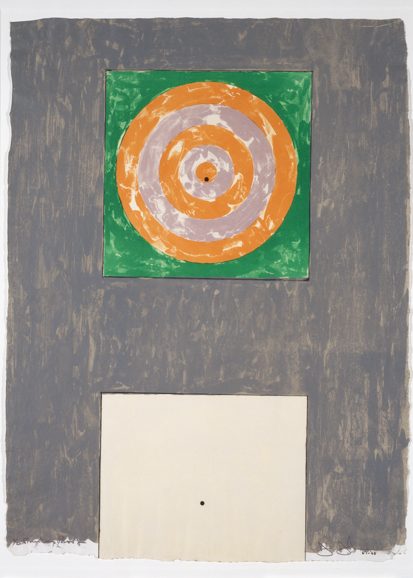
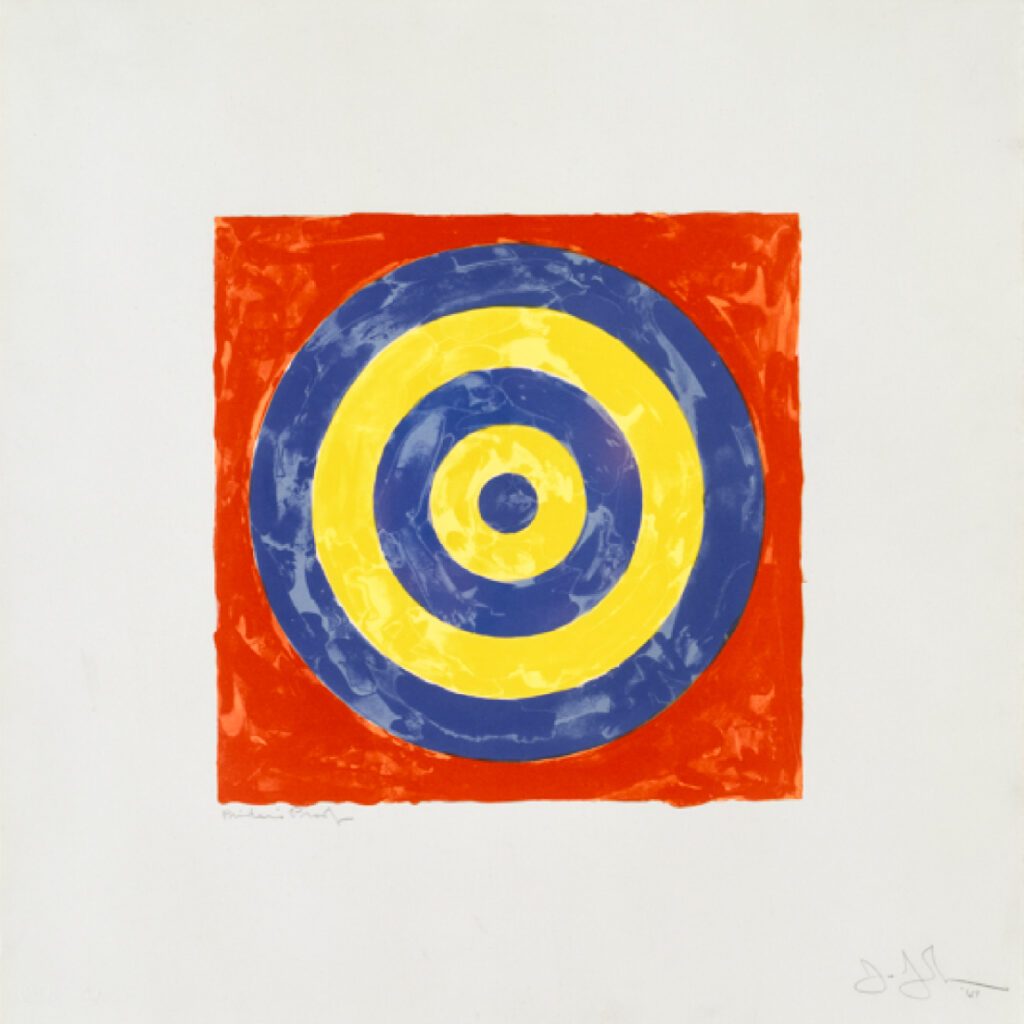
Between 1967 and 1968 Johns made six lithographs with Fred Genis at U.L.A.E., four of which took targets as their subject. Each work made separate references back to earlier pieces, and on occasion the stones themselves were reused from one work to the next — the physical material of printmaking becoming part of the meaning.
Johns has worked extensively in printmaking throughout his career, producing a body of graphic work widely regarded as among the most significant of any postwar artist. His prints are held in major collections worldwide, including the Museum of Modern Art and the Metropolitan Museum of Art in New York.
Jasper Johns continues to live and work in the United States.