Hedda Sterne was born in Bucharest, Romania, in 1910. She studied art in Bucharest, Vienna, and Paris before fleeing Europe ahead of the Second World War and settling in New York in 1941. There she became embedded in one of the most remarkable artistic communities of the century — the New York Abstract Expressionists — and was the sole woman included in the famous 1951 Life magazine photograph known as “The Irascibles,” a portrait of fifteen artists who had protested the conservative direction of American art. Characteristically, Sterne stood apart from the group, positioned slightly above and behind the others, as if observing from her own vantage point.
That independence defined her entire career. While her work emerged from the same milieu as de Kooning, Rothko, and Newman, Sterne resisted categorisation with remarkable consistency, moving freely between figuration and abstraction, between painting, drawing, and printmaking, always following her own inquiry rather than any prevailing movement. Her work ranged from dense urban machine imagery in the 1950s to delicate linear abstractions, vertical compositions, and deeply personal meditations on nature and time.
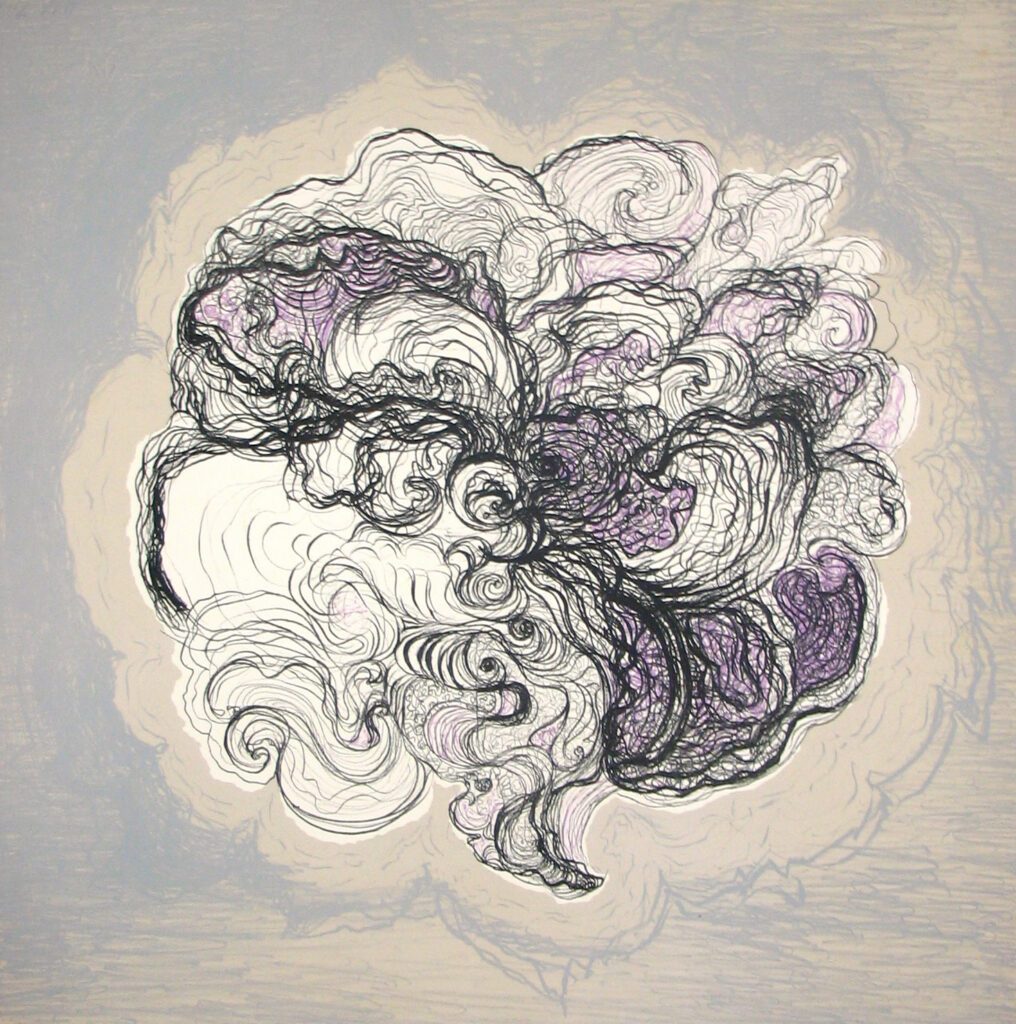
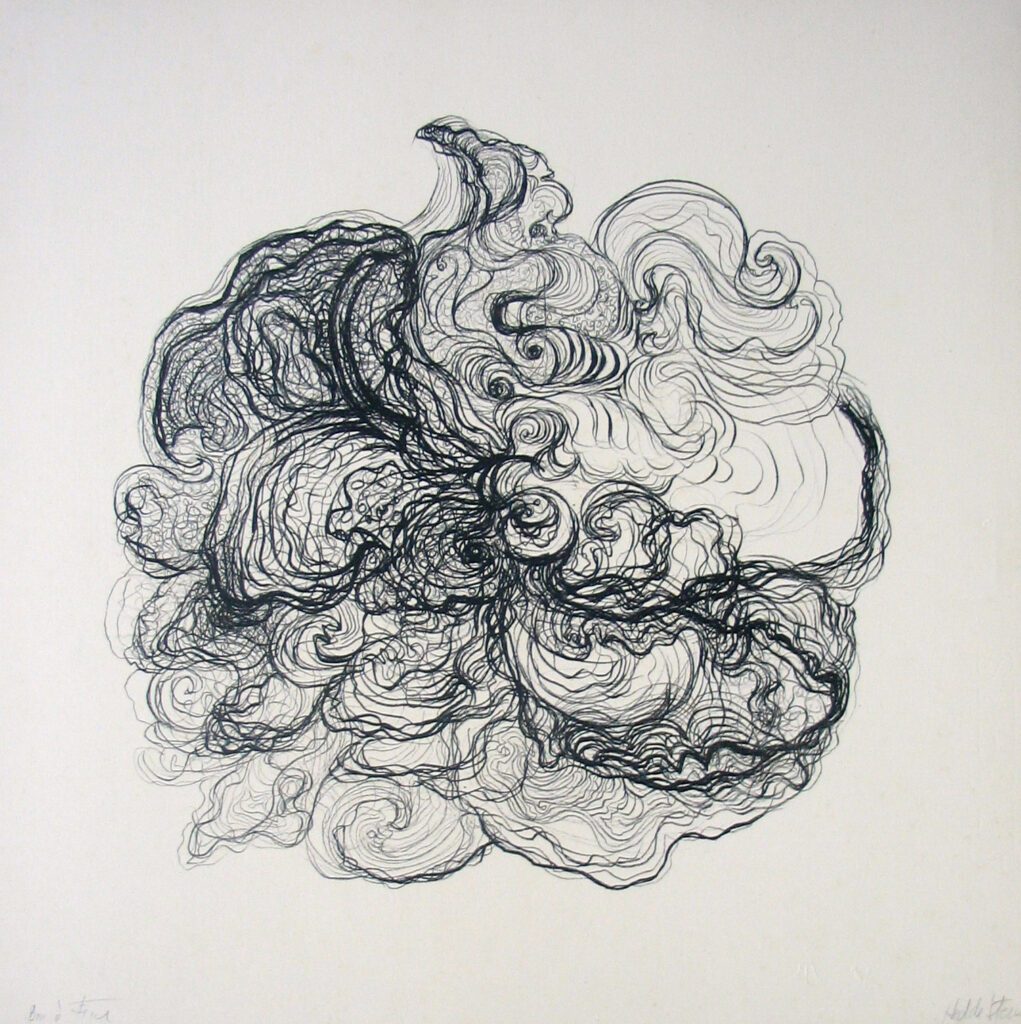
Her prints Metaphores and Metamorphos I and II were produced at Hollanders Workshop, New York, in collaboration with Fred Genis and Irwin Hollander. The titles signal her enduring preoccupations — transformation, correspondence, the way one thing becomes or reveals another. The lithographic medium, with its capacity for subtle tonal gradation and fluid mark-making, suited her exploratory sensibility beautifully, and the prints carry the same quality of sustained, searching attention that animates all her best work.
Sterne continued to work and exhibit into her nineties, earning growing recognition late in life for a body of work of remarkable range and integrity. She died in New York in 2011 at the age of one hundred.