Peter Takal was born in Bucharest, Romania, in 1905 — the same city that would later produce Hedda Sterne, his contemporary and fellow émigré to New York. Takal studied art in Berlin and Paris before settling in the United States, where he became known as a painter, draughtsman, and printmaker of quiet distinction. His work occupies a contemplative space — lyrical, restrained, and deeply attentive to the natural world.
Takal’s art is characterised by a delicate economy of line and a sensitivity to light that reflects both his European training and his sustained engagement with landscape. His paintings and prints often depict trees, hillsides, and natural forms rendered with a spare elegance that owes something to both the European modernist tradition and the meditative qualities of East Asian brushwork. There is nothing superfluous in his compositions — every mark earns its place, and the spaces between marks carry as much meaning as the marks themselves.
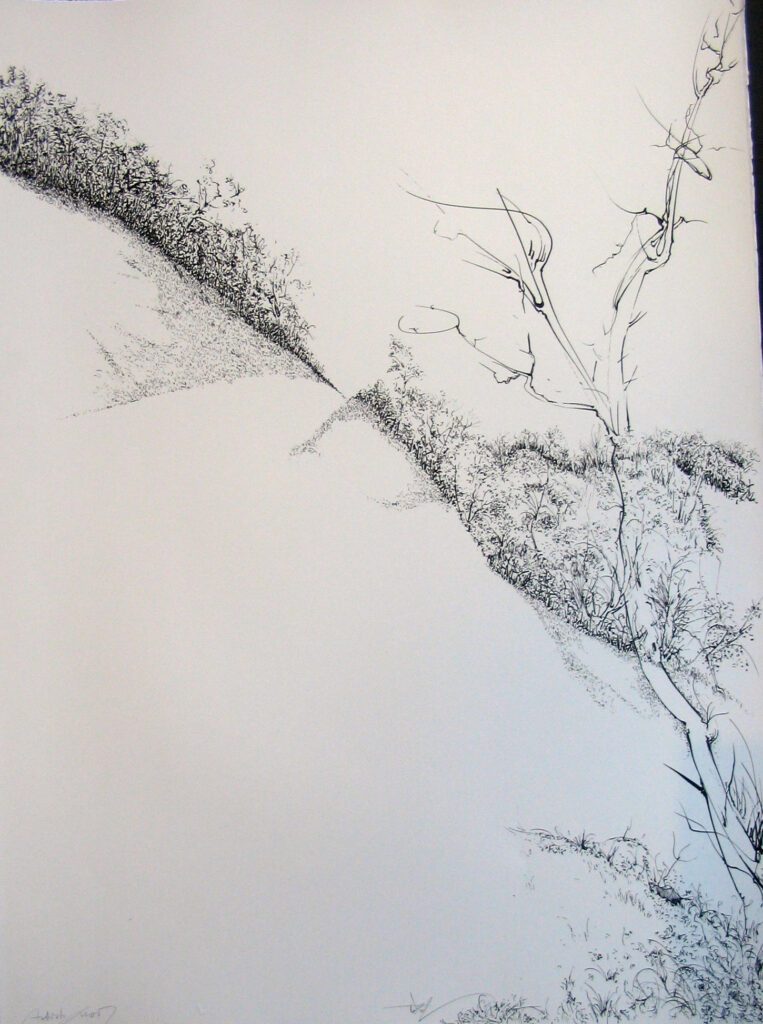
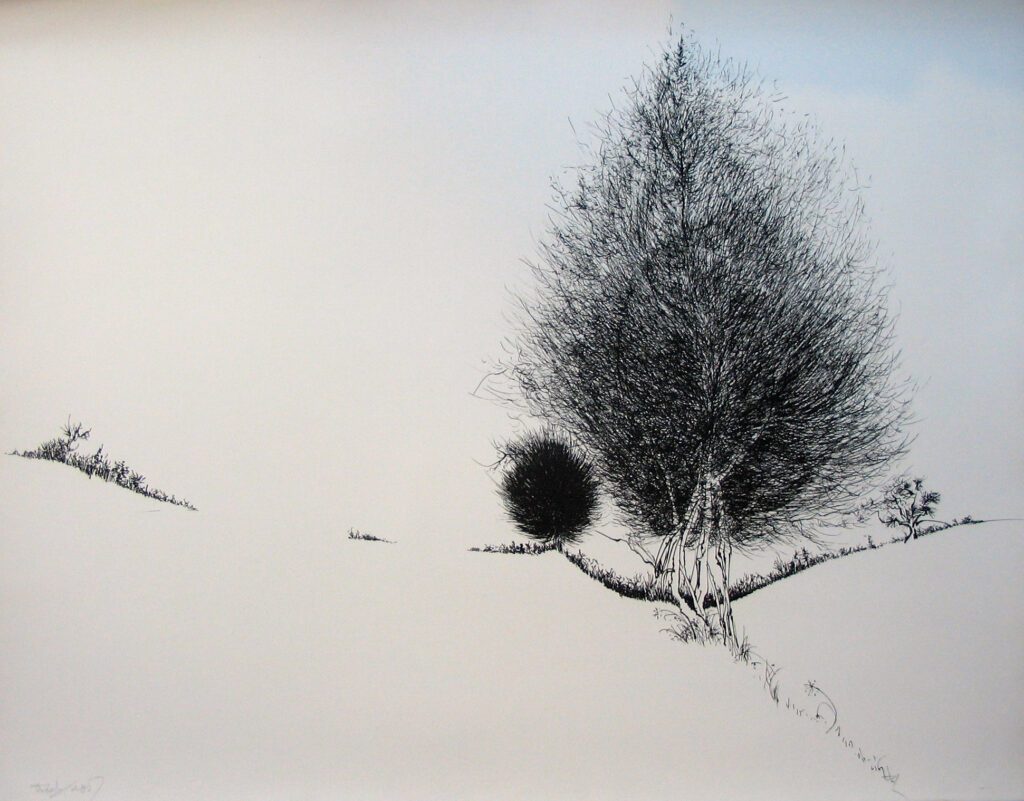
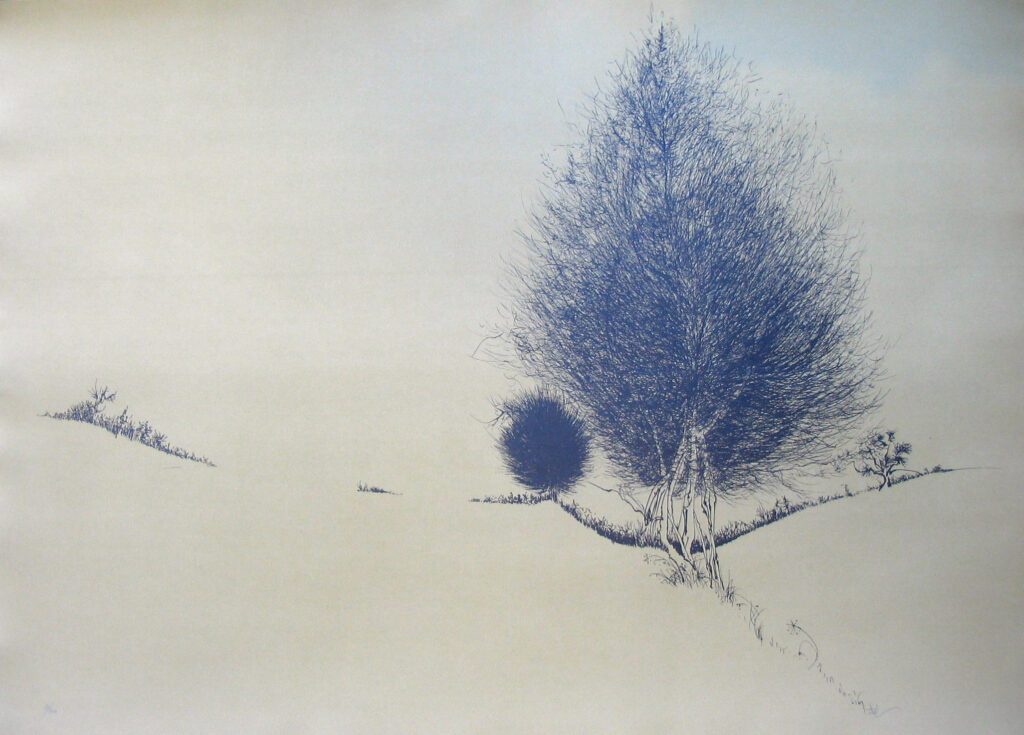
His prints Hillside and Tree Black and White, produced in collaboration with Fred Genis, reflect these qualities with particular clarity. Created at Hollanders Workshop, New York, with Fred Genis and Irwin Hollander, the works demonstrate how lithography — with its capacity for the finest gradations of tone and the most sensitive transfer of drawn line — suited Takal’s sensibility perfectly. Hillside carries a luminous atmospheric quality, while Tree Black and Whitedistils his subject to its essential structure, the stark contrast of the composition giving the image a stillness and strength that is quietly commanding.
Takal exhibited widely throughout his career and was a respected presence in the New York art world for decades. His work is held in the collections of the Museum of Modern Art, the Brooklyn Museum, and numerous other American institutions.
Peter Takal died in New York in 1995.