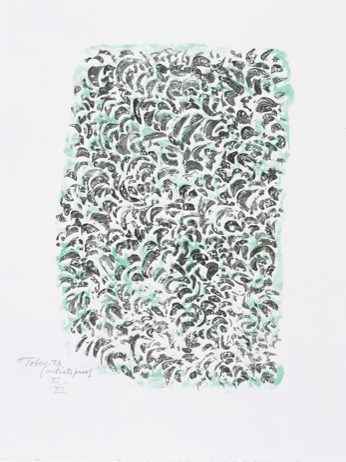
Mark Tobey was born in Centerville, Wisconsin, in 1890. One of the most spiritually and philosophically adventurous painters of the twentieth century, Tobey spent decades exploring the intersections between Eastern and Western visual traditions, developing a style of intricate, allover mark-making he called “white writing” — a dense, luminous calligraphic technique that predated and influenced the Abstract Expressionist movement, though Tobey always remained apart from it.
Tobey’s work was shaped by wide-ranging travel and deep spiritual inquiry. A convert to the Bahá’í Faith in the 1920s, he spent extended periods in England, the Middle East, and Japan, where he studied Zen calligraphy and ink painting. These influences permeated every aspect of his practice, giving his canvases a meditative quality quite distinct from the gestural energy of his New York contemporaries. In 1960 he moved permanently to Basel, Switzerland, where he lived until his death.
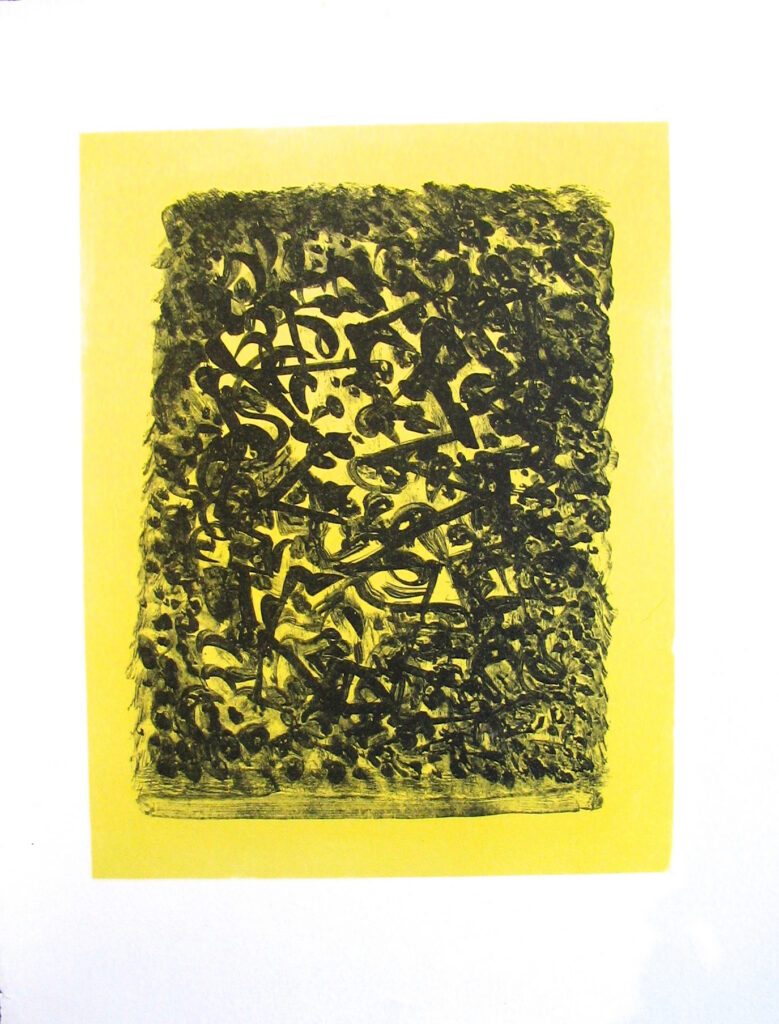
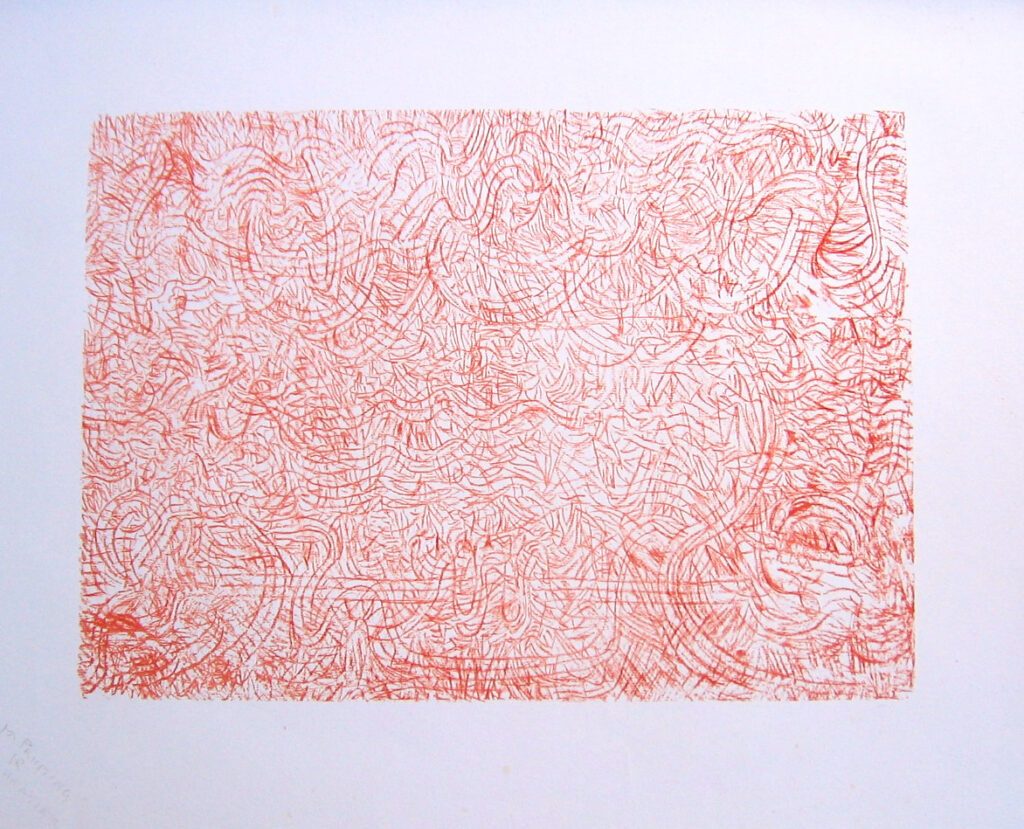
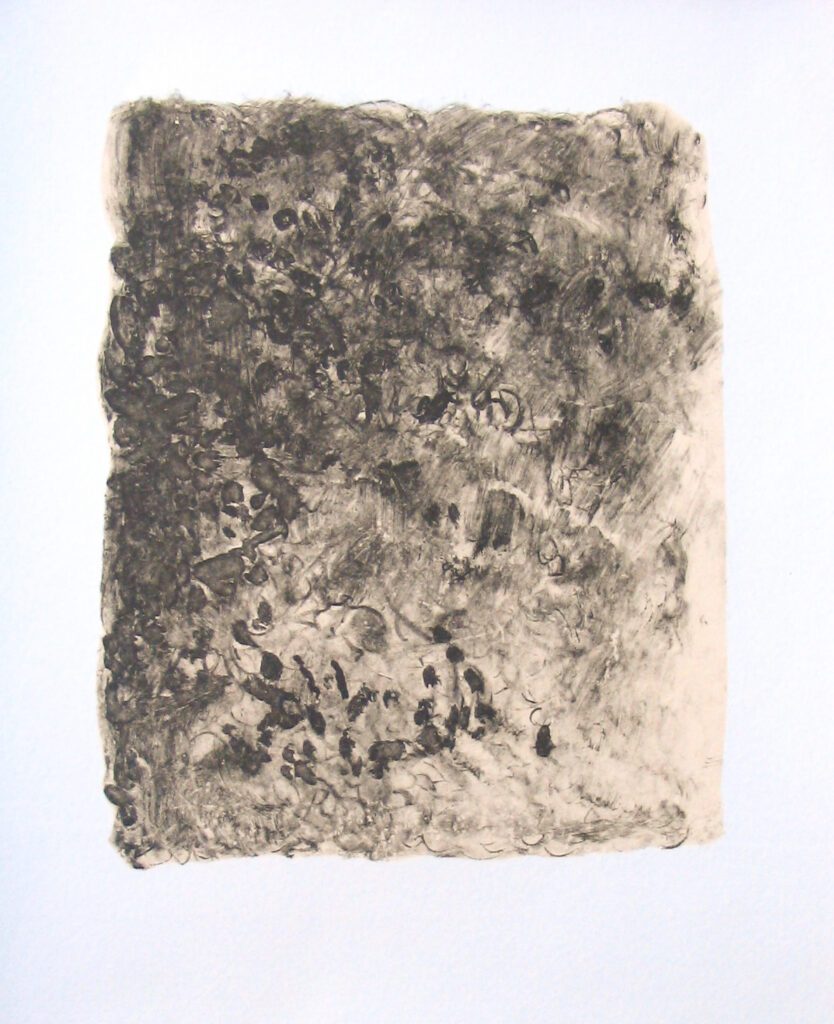
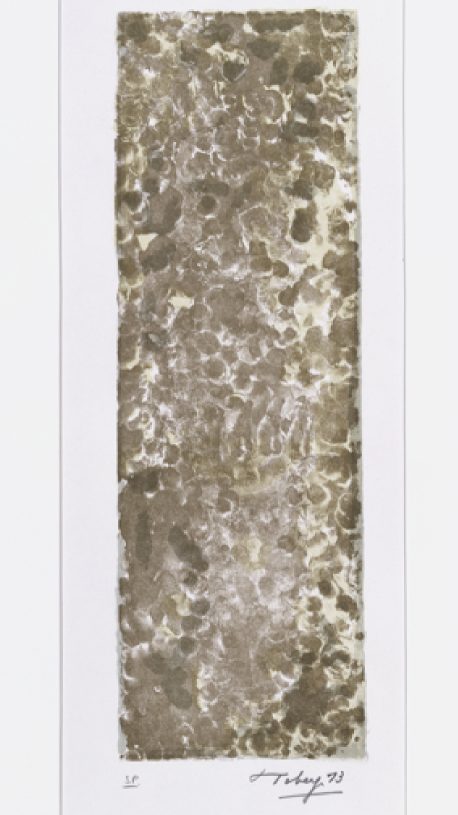
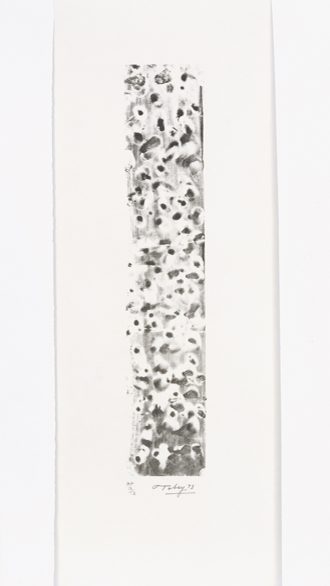
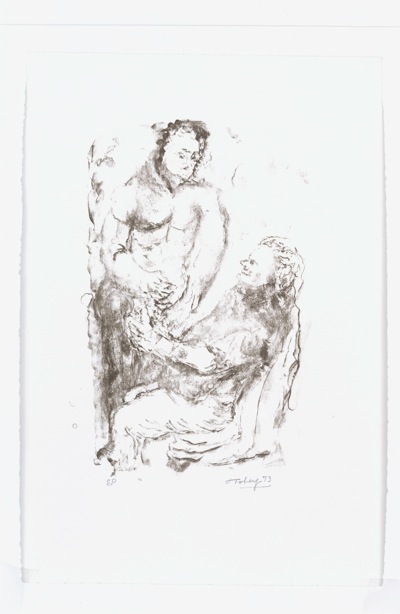
His collaboration with Fred Genis came about in 1973, when Paul Cornwall-Jones, director of Petersburg Press in London, contacted Genis at his workshop in Oudkerk in the Netherlands and commissioned him to print a group of lithographs from Tobey in Basel. Genis travelled to Basel carrying two lithographic stones, a number of plates, and transfer paper. Initially the two men worked together for three weeks, Tobey making his first lithographs on transfer paper before moving to work directly onto the plate with a brush — a method that suited his calligraphic instincts, as seen in Chinese Memories. Genis returned to Friesland for proofing, then came back for the artist to make corrections, with several further visits required to complete the project.
Mark Tobey died in Basel in 1976, leaving behind a body of work that quietly bridged East and West across five decades of dedicated practice.